A volunteer-led community group stewarding the Hillside Natural Area in El Cerrito
The HNA sits on the ancestral Huchiun territory of the Chochenyo-speaking Ohlone people.
For thousands of years, the Huchiun tended these hills, harvesting with care and knowing the plants and seasons intimately. Stewardship didn’t start with us, and we’re committed to doing our part while continuing to learn and listen.
We’re guests here, and we’re grateful.
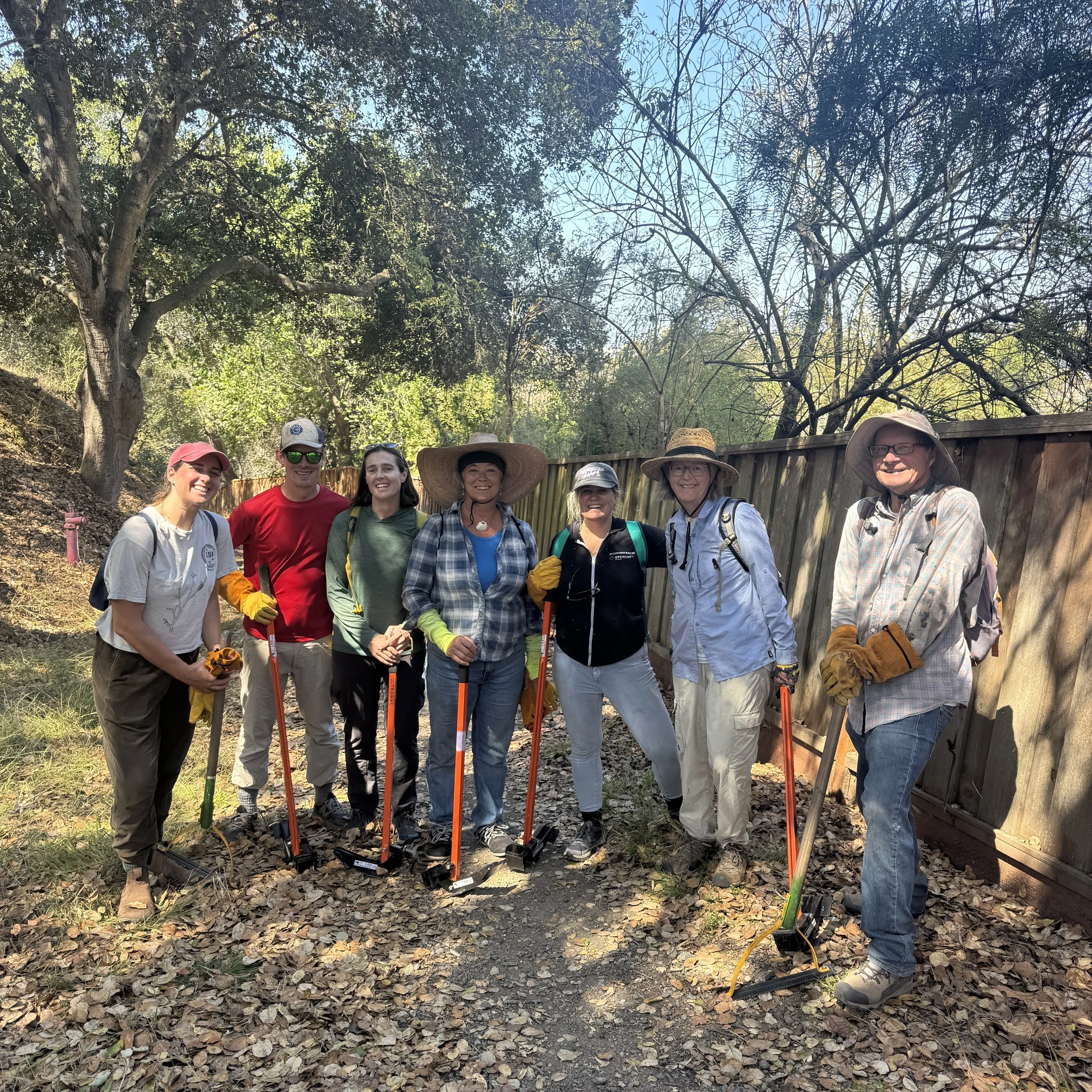
About our workparties
-
Check our Events page or sign up for our newsletter to receive updates directly in your inbox.
-
Main Focus: French Broom Removal
French broom is one of the most damaging invasive plants in our area. Help us remove it before it spreads further, crowds out native species and increase fire risks.
We also tackle a wide range of other restoration tasks, including early weed management (Crofton weed, stinkwort, and others), removing thatch and dead grasses that can suffocate native plants, digging out pampas grass, containing English ivy, and much more.
-
All are welcome — whether you're here to work, explore, or simply connect. Come see what the area looks like, learn about our fire reduction and land restoration efforts, or just enjoy the space. Birders and insect enthusiasts are especially encouraged to come assess the meadow while we work.
Kids are especially welcome, with several fun and educational activities available.
We do ask that parents or caregivers supervise their children and set their own comfort boundaries. From using tools to climbing trees, each family can define what feels appropriate, as children remain under their responsibility. If several kids are present, it can be helpful to agree on shared guidelines. It’s a nice opportunity to practice a bit of collective living, even for a short time.
Keep in mind that they may encounter ticks, poison oak, wasps, and other natural hazards, and that learning how to recognize and safely deal with these situations is an important part of spending time in nature.
-
Removing broom can be hard work, but it also gives us the chance to uncover and better understand the fascinating community of plants and animals that call this place home. Being on site twice a week allows us to slow down, dig deeper, and notice things we might otherwise miss.
You can simply come to observe, draw, meditate, explore, or enjoy being part of the community. You don’t have to work! There are many ways to connect with the Hillside, and sometimes the best contribution is simply being there.
We’re particularly looking for people who can help us better understand our local habitat: making observations on iNaturalist, documenting species, tracking seasonal changes, and looking for patterns and trends that can help us understand how to better support the ecosystem.
-
We usually meet rain or shine — yes, even in the rain! As long as you come well-equipped (rain jacket, waterproof boots, layers), the weather really isn't a barrier. In fact, rainy workparties have their own charm: there's something deeply satisfying about digging in the mud, getting the work done together, and then wrapping up with a hot drink in hand afterward.
The things that do stop us are air quality and extreme heat. We cancel during Spare the Air Alerts — when the Bay Area Air Quality Management District flags unhealthy air, usually from wildfire smoke — since it's not safe to be outside doing physical work on those days. We also cancel or reschedule during heatwaves, when temperatures climb high enough to make outdoor labor risky, especially for dehydration and heat exhaustion. Rain, we can handle. Smoke and extreme heat, we can't.
-
Tools will be provided.
If possible, bring your own gloves, though we will have extras available.
Please bring water and sun protection.
Wear long pants, long sleeves, socks, and sturdy closed-toe shoes. When it is tick season, light-colored clothing is recommended. Pants that can be tucked into socks are best, insect repellent can be helpful, and please be sure to check yourself for ticks afterward.
Poison oak is often present but we will help you identify it and protect yourself.
If you have not already done so, please print and sign the City of El Cerrito's Release for the City Volunteer Program. Copies will also be available on site.
What we do
steward the land
Link to the presentation we made to the Forest commitee
The Hillside Natural Area is a biodiversity hotspot, home to hundreds of native plant species and a rich mosaic of plant communities shaped by terrain, orientation, and water. From oak woodlands to coastal grasslands and valleys filled with roses, monkeyflowers, and toyon, this landscape reflects the resilience of California’s native flora. Adapted to the local climate, these plants retain moisture, stabilize soils, support biodiversity, and efficiently sequester carbon.
They are also overwhelmed by invasive vegetation that disrupts the natural balance of the ecosystem.
With informed and active stewardship, this landscape can regenerate, teach, and endure.
reduce fire risk
As a Wildland–Urban Interface (WUI), the park is considered a high fire-risk area—especially due to invasive, highly flammable species like French broom. By prioritizing its removal, we reduce fire risk while creating space for a more fire-resilient native landscape.
This work is carried out in close partnership with the El Cerrito Fire Department.
The 2025 wildfires in Altadena and Pacific Palisades are a stark reminder that similar events could happen in El Cerrito. With limited public resources, community stewardship plays a critical role in protecting our homes and community.
build community
Third spaces are increasingly important. Our weekly work parties are a restorative third space to unplug, destress, and work with our hands. Volunteers connect not only with the earth, but also other volunteers. We are poets, students, retired professors, and tech workers from varying backgrounds.
This is a zero-cost community where you can come and go as your schedule allows. Some of us volunteer weekly, while others join once a year on Earth Day. We accommodate all abilities and ages.
We believe that caring for our community is intrinsically human, and caring for our public spaces should only be outsourced to the government or corporations.
Sign up for our newsletter
We have two newsletters:
Weekly Work Party Updates (sent 1x weekly)
A short weekly email with information about where we’re meeting, when to show up, and what to bring for upcoming volunteer events.
Monthly Impact Newsletter (sent ~1x monthly)
A monthly recap with project progress, stories from the field, fun facts about native plants, and ways to stay involved.
We look forward to connecting with you!